
The Unquiet Mind: Finding Support for Nighttime Anxiety
Gina Hicks
There’s something about the dark that strips away the distractions, and during the day, with a packed schedule, a phone full of notifications, and a relentless to-do list, the noise keeps moving fast enough that deeper worries stay in the background.
Nighttime anxiety has a way of surfacing everything that the daylight hours help push aside. The room is quiet, and the mind gets loud. Many individuals find that this is when the fear, dread, and rumination settle in like unwelcome guests. No amount of exhaustion seems to make the anxiety move out so that sleep can move in. This is an experience that goes deeper than a habit of overthinking, and it affects far more people than most would expect.
The psalmist wrote from that same place – needing rest and finding it not through effort, but through trusting God.
In peace I will both lie down and sleep; for you alone, O Lord, make me dwell in safety. – Psalm 4:8, ESV
The Mind That Won’t Slow Down
The mind was not designed to simply switch off at bedtime. What unfolds during the night is often a continuation of what the brain has been processing all day, except now it is without buffers.
 Societal expectations, unfinished conversations, and fears about the future compete for space in a mind that is depleted but not yet rested. This results in a cycle that feels impossible to break. The more an individual tries to force themselves to sleep, the more alert the brain becomes, and this alertness leaves more room for worry to expand.
Prevailing attitudes toward stress management often center on productivity and positive thinking, leaving little room for what happens in the dark. Individuals are told to decompress, meditate, and develop better routines as if anxiety simply responds to instruction.
The mind doesn’t follow a schedule, and nighttime hours are often when the body finally reckons with what has been set aside all day. For many, it is the first real moment of stillness in hours – and stillness, without the proper foundation, can feel more threatening than restful.
Christian counselors recognize this kind of internal reckoning – and they understand it is not a sign of weakness. It is, in many cases, the beginning of genuine healing.
Nighttime Anxiety and the Stories People Tell Themselves
One of the hardest things about lying awake with anxiety is the narrative that forms in the silence. It’s no surprise that the mind tends to reach for worst-case scenarios after dark – the health concern that becomes a diagnosis, the financial worry that becomes a catastrophe, the relational dilemma that becomes permanent loss.
These are stories built on fear, and the late-night hours provide a stage where they can feel entirely convincing. Without external input, they have room to grow and deepen well beyond what the waking hours would allow.
This kind of anxious thinking frequently follows a specific pattern: a thought enters, the body responds with a physical stress reaction, and the thought grows larger in response to that signal. Anxiety and sleep disruption are closely interconnected, feeding each other in a loop that becomes harder to interrupt the longer it continues.
Just because an individual understands this cycle doesn’t mean it will not automatically break – but it does begin to shift the relationship a person has with his or her own thoughts. This understanding introduces the possibility that what feels overwhelmingly true at two in the morning is not necessarily the full picture of reality.
Scripture offers an anchor that is more stabilizing than perspective:
You keep him in perfect peace whose mind is stayed on you, because he trusts in you. – Isaiah 26:3, ESV
Learning to return to that anchor in the middle of the night is a practice worth developing.
What the Body Carries Into the Night
Anxiety is not just a mental experience. It is also deeply physical. The body tends to hold the day’s stress in ways that are not visible until the demands of wakefulness are removed. Elevated cortisol levels and a heightened nervous system can cause nighttime symptoms, such as restlessness, muscle tightness, or an inability to settle into stillness.
It is for these reasons that an approach must address more than the mind; it must also include the body. Practices such as slow, intentional breathing, deliberate muscle relaxation, and grounding techniques can signal to an overactive nervous system that it is safe to settle.
These are not instant solutions, but over time, they offer a meaningful starting point for releasing what the body has been carrying throughout the day.
Chronic stress and sleep disruption can become embedded in the nervous system, which makes genuine relaxation difficult even in safe environments. This is a physiological response to sustained pressure and is one of the reasons why professional support will make a meaningful difference.
Christian counselors are trained to address both the emotional and physical dimensions of anxiety, recognizing that the person seeking help is not just a collection of thoughts. They are a body, a soul, and a spirit navigating something real. Jesus extended a direct invitation for this kind of exhaustion:
Come to me, all who labor and are heavy laden, and I will give you rest. – Matthew 11:28, ESV
Navigating Nighttime Anxiety Through Faith and Support
Just because an individual has faith does not mean he or she will not experience anxiety. But faith offers a foundation that remains stable even when the mind is not. This allows the individual to bring fear into an honest conversation with God instead of trying to manage it alone in the dark.
Developing practices that return the nervous system to a place of safety through surrender is itself a form of healing. Prayer, Scripture, and intentional breathing serve as anchors in the late-night hours when the mind continues to spiral.
Professional support becomes essential when anxiety persists, deepens, and begins to affect daily functioning. When someone works with Christian counselors, they find a space where the clinical and the spiritual dimensions of anxiety are held together. It is in this space that they can examine the thoughts that surface in the night and understand the patterns beneath them. The result is the development of real tools for moving through nighttime anxiety.
Faith and professional care are not competing approaches. Together, they reinforce each other in powerful ways. Scripture reminds believers not to be anxious about anything, but to bring every request to God through prayer and thanksgiving – and the peace that follows surpasses all understanding (Philippians 4:6–7, ESV).
The Night Does Not Have the Final Word
The hours after midnight can feel like the loneliest place to be – especially when the rest of the world is asleep, and the mind is running its own quiet marathon. In those hours, it becomes easy to believe that what an individual is experiencing is uniquely theirs and that no one else will grapple with these particular fears in these particular hours.
The reality is that this experience is shared among many, connecting more people than the silence would suggest. Those who carry their faith into the dark hours find something profound in the knowledge that God is not absent from the night. He knows what surfaces when everything else is still; He is present in it and steady when nothing else seems to be.
Healing from anxiety is a process that deserves real investment. It involves understanding how the mind works and giving the body what it needs to release accumulated stress. Sometimes it requires support from people who are equipped to walk alongside the fears that surface in the dark.
For many, simply naming what surfaces at night and bringing it into an honest counseling relationship is where real movement begins. This journey calls for patience – and the willingness to cast every anxiety at the feet of the One who already carries them.
If you or a loved one has found that nights have become a source of fear rather than rest, support is available. Reach out to our reception team to get connected with support that can help you navigate nighttime anxiety from a place of faith.
www.sleepfoundation.org/mental-health/anxiety-and-sleep
https://www.psychcentral.com/anxiety/anxiety-and-sleep
https://www.verywellmind.com/nighttime-anxiety-5272100
https://www.webmd.com/anxiety-panic/anxiety-and-sleep
https://www.psychologytoday.com/us/blog/the-squeaky-wheel/nighttime-anxiety
https://www.headspace.com/meditation/anxiety
Photo:
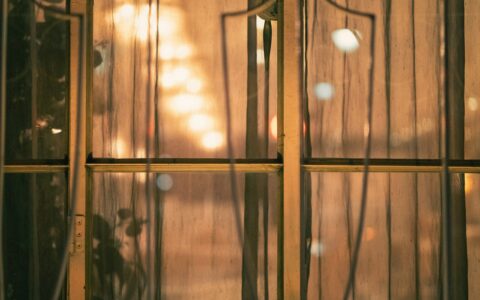
“Window Closeup,” courtesy of ayumi kubo,Unsplash.com, CCO License

Other articles that might interest you...


Understanding and Overcoming Nighttime ...
You may often hear people comment on whether they are (or aren’t) morning or evening people. Some people function better,...
continue reading » 
Anxiety: Our Best Friend or Worst Enemy
How do we deal with feelings of anxiety? In Philippians 4:6 we are told: “Do not be anxious about anything.”...
continue reading » The Challenges of Anxiety
In today’s society, we have all become accustomed to the notion that anxiety is a bad or negative thing to...
continue reading »