
When Anxiety Keeps You From Church
Ricky Guadarrama
As I write this, it is Wednesday of Holy Week, a week to remember the sacrifice our Lord and Savior made to set us free from sin and death. We are reminded of the importance of the Church as we reflect on Jesus’ words: “I tell you that you are Peter, and on this rock I will build my church, and the gates of Hades will not overcome it.” (Matthew 16:18)
The Church is supposed to be a place of refuge where one can find encouragement to continue to walk in faithful righteousness to the teachings of Jesus. Yet, it’s a horrible feeling when you realize that the place that should bring you the most comfort, God’s House, is the place that your body resists the most. Of course, you want to be there. You’re supposed to be there, right?
You feel guilty for not jumping for joy that you get to go to God’s house, and you feel a teeny bit of envy toward those free-spirited church-goers who sing, clap, and “amen” at the appropriate times. Their faces aren’t red. Why aren’t their hands sweating? Meanwhile, you’re stuck in the car, trying to talk yourself into walking into the building. Or maybe you’re still in bed, trying to fight off the instinct to go next week.
Just because you’re a Christ follower and lover of God doesn’t mean that you will automatically gravitate to His building or His people. Sometimes anxiety can prevent you from enjoying or craving the place that you need the most, the church.
Maybe it’s the people?
There are probably hundreds, if not thousands, of excuses that people use as to why they don’t want to go to church. Dealing with people is one of the more common reasons. When anxiety hits, it’s somewhat instinctual to fall into fight or flight mode. Unfortunately, church crowds, no matter how friendly, godly, or sincere they might be, can feel like a threat to your overstimulated nervous system.
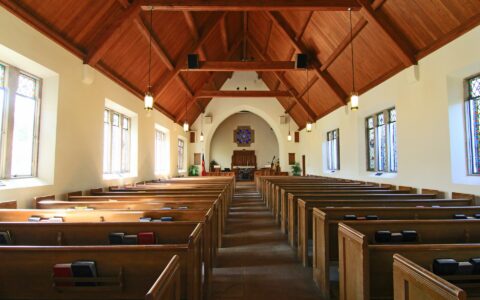
You walk into those scared walls, the ones that are supposed to be a sanctuary, and immediately feel the overstimulation. The music is loud and people are hugging each other. A well-meaning greeter hands you a bulletin while another smiles and says, “Welcome.” To most people, these would be friendly and inviting signs. If you are dealing with anxiety, these can be triggers that make you want to turn around and head home.
It’s not that you’re antisocial, socially awkward, or even that you don’t crave community at a deep level. But being around a lot of people when you’re already anxious can exacerbate your symptoms. You might even love these people, but your body instinctively tells you to get out, and fast.
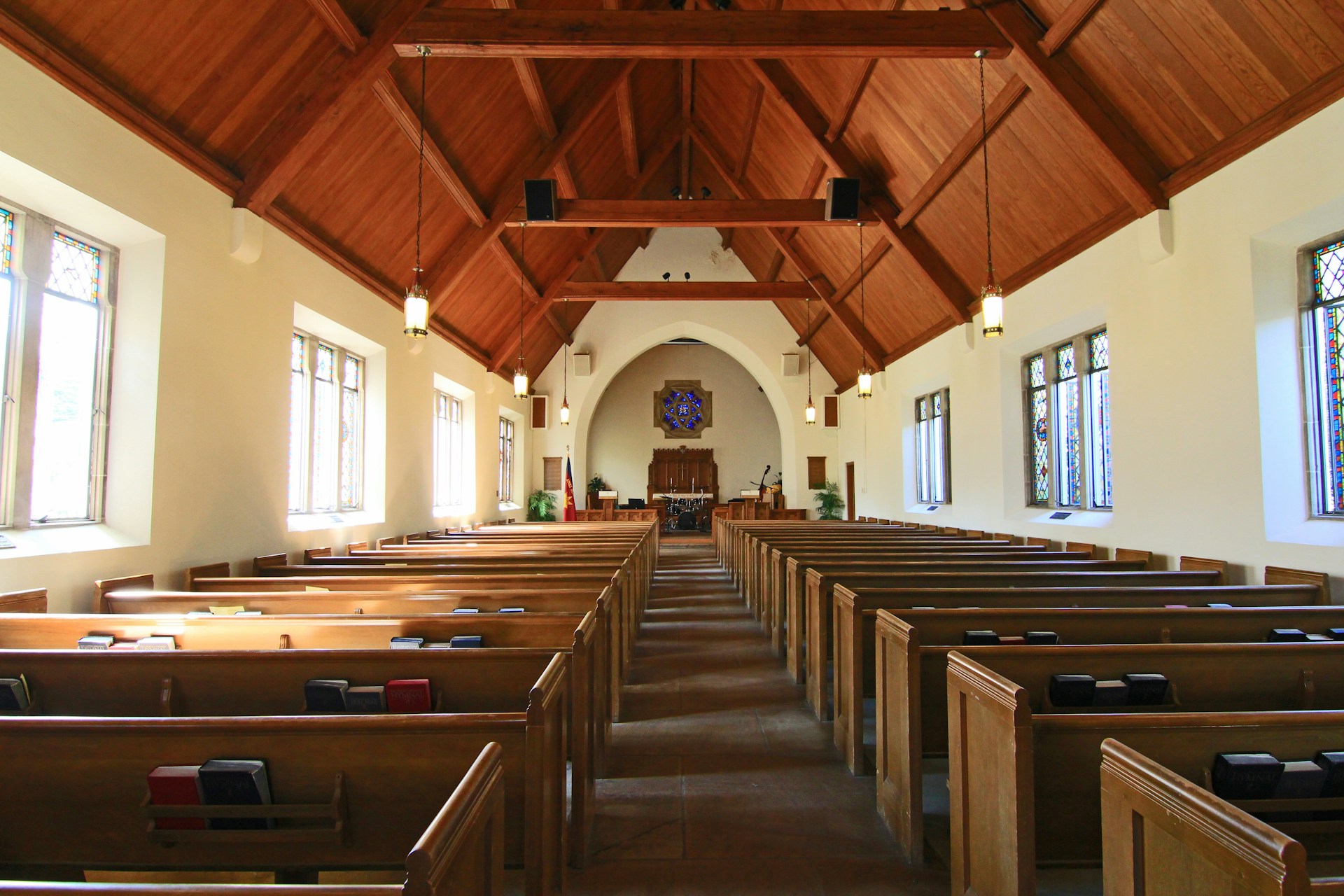 Or maybe you don’t know the congregation. If you’re new to a church, people inducing anxiety can be even more pronounced. From the minute you walk through the doors, you can feel eyes focused on you, the newbie. Anxiety mounts and makes you question whether their greetings are genuine or obligatory, and you wonder if you’re sitting in someone’s favorite pew.
Maybe it’s the questions?
Where there are people, there are also questions. Lots of questions. Most people, especially those in a church setting, ask questions to get to know you better. Their inquiries are a way to get you involved in the church or to make you feel more welcomed. But if you suffer from anxiety, especially social anxiety, it can feel like the Great Inquisition.
Church people have a reputation for asking personal questions. You can see this phenomenon mocked in pop culture, and to some extent, there is truth behind it. Church people try to get personal with each other and with new people for all kinds of reasons. Some reasons are good, and some are not.
Often, people genuinely care about you and are just looking for a way to connect, even if it comes across a little awkward or too forward. They’re used to a culture of testimonies and prayer requests where oversharing is almost expected. But sometimes it’s not really care, but curiosity. In the church culture, transparency and honesty are expected, so when personal questions are asked, there is pressure to not only be honest but to overshare.
Maybe it’s the pressure to perform?
While many modern churches are straying away from their more formal roots, some believers (especially older ones) still feel the pressure to dress in their Sunday best, raise their hands in worship, nod during sermons, and laugh at the pastor’s jokes. They feel the pressure to take notes to show that they are listening intently and to shake hands with a smile and a “God bless.” After church, some congregations linger over coffee and fellowship.
While these things can be a great and healthy part of church culture, they can also cause anxiety for people who don’t know the conventions of the church. They create pressure to keep it all together on the outside, even if you’re falling apart inside. If you’re someone who has anxiety, this pressure to perform can feel exhausting.
Maybe it’s the trauma?
If you have been hurt in a previous church, the idea of going to service can cause anxiety. Maybe someone in leadership abused their power, or you were judged, gossiped about, or ignored. Or maybe you were dismissed when you needed love the most.
Even a new church, which might be kind, healthy, and balanced, can cause you to pause and to brace for impact. And if people in a church hurt you in the past, the idea of getting involved with another church group might send you into an emotional spiral. While you know on a logical, mental level that you shouldn’t judge people based on how others have treated you in the past, it can be difficult to communicate that to your emotions.
God meets you
And let us consider how we may spur one another on toward love and good deeds, not giving up meeting together, as some are in the habit of doing, but encouraging one another – and all the more as you see the Day approaching. – Hebrews 10:24-25, NIV
These verses emphasize the importance of community for support and shared faith. They are what many Christians use to emphasize the importance of assembling as believers. Yes, God wants us to gather together and support each other in our faith.
However, these verses do not negate that God meets people in their lowest, loneliest, and most anxious places. And He does so both in Scripture and in our modern world. He meets us right where we are, even when we’re avoiding going to church on a Sunday morning.
Take Elijah’s story from 1 Kings 19, for example. He was overwhelmed and afraid and ran away from everyone, literally into the wilderness to hide in a cave. He even asked God to take his life. But God didn’t shame him. He asked, “‘What are you doing here, Elijah?’” (1 Kings 19:9, NIV) Only a few verses later, God asked the same question again. Then God, without anger or rebuke, provided rest and food for him. God met him in his isolation.
Hagar also ran away. Fleeing into the desert, in Genesis 16, she was pregnant and mistreated. Still, God found her in her moment of desperation. He spoke directly to her pain, and she responded: “She gave this name to the Lord who spoke to her: ‘You are the God who sees me,’ for she said, ‘I have now seen the One who sees me.’” (Genesis 16:13, NIV)
In the book of Jonah, we read the story of a man who literally ran away from his calling. Jonah ran away from God’s people. Yet, God pursued him, even in his rebellion, and met him in the belly of a fish. It was there, in that isolated and dark place, that Jonah prayed, repented, and was redirected.
Community is important, and the church can be a place of healing, but God is not limited to church walls. The Bible doesn’t tell people to stay away until they are perfect, until their anxiety is gone. No, it says, “‘Come to me, all you who are weary and burdened, and I will give you rest.’” (Matthew 11:28, NIV)
Come as you are
If just thinking about walking into a church building makes your chest tighten, you might need help sorting through things. Therapy can be an amazing gift in that process. A good counselor, especially one who shares your faith, can help you work through the things that are keeping you stuck in the parking lot instead of the pew.
God gives grace for the isolated place of healing. Let God meet you where you are because sometimes the courage you need starts by asking for help. A therapist is a good support in this process. Call the office today, and we can connect you with a Christian therapist who can support you in your journey back to church.
“Church”, Courtesy of Debby Hudson, Unsplash.com, CC0 License;

Other articles that might interest you...


The Challenges of Anxiety and ...
For most people, addressing anxiety feels overwhelming. Since anxiety has a physical and mental toll, it often feels like a...
continue reading » Spiritual Development: Trusting God ...
Christians will experience a wide range of emotions and struggles in this life and in the process of spiritual development....
continue reading » Separation Anxiety in Children Vs. ...
Separation anxiety is a normal phase of child development that most babies and toddlers go through where they are clingy...
continue reading »